AmatriumGPT: A Secure AI Knowledge Hub for Materials Engineering
/ Manufacturing / United States / 2026 /
- Kickoff to Production
- 5.5 months
- Seats and Document Uploads
- Unlimited
- Less Time on Document Queries
- 30-40%
Kickoff to Production
Seats and Document Uploads
Less Time on Document Queries
Summary
Amatrium works with industrial materials companies, where critical project knowledge often sits across thousands of specifications, datasheets, and research reports.
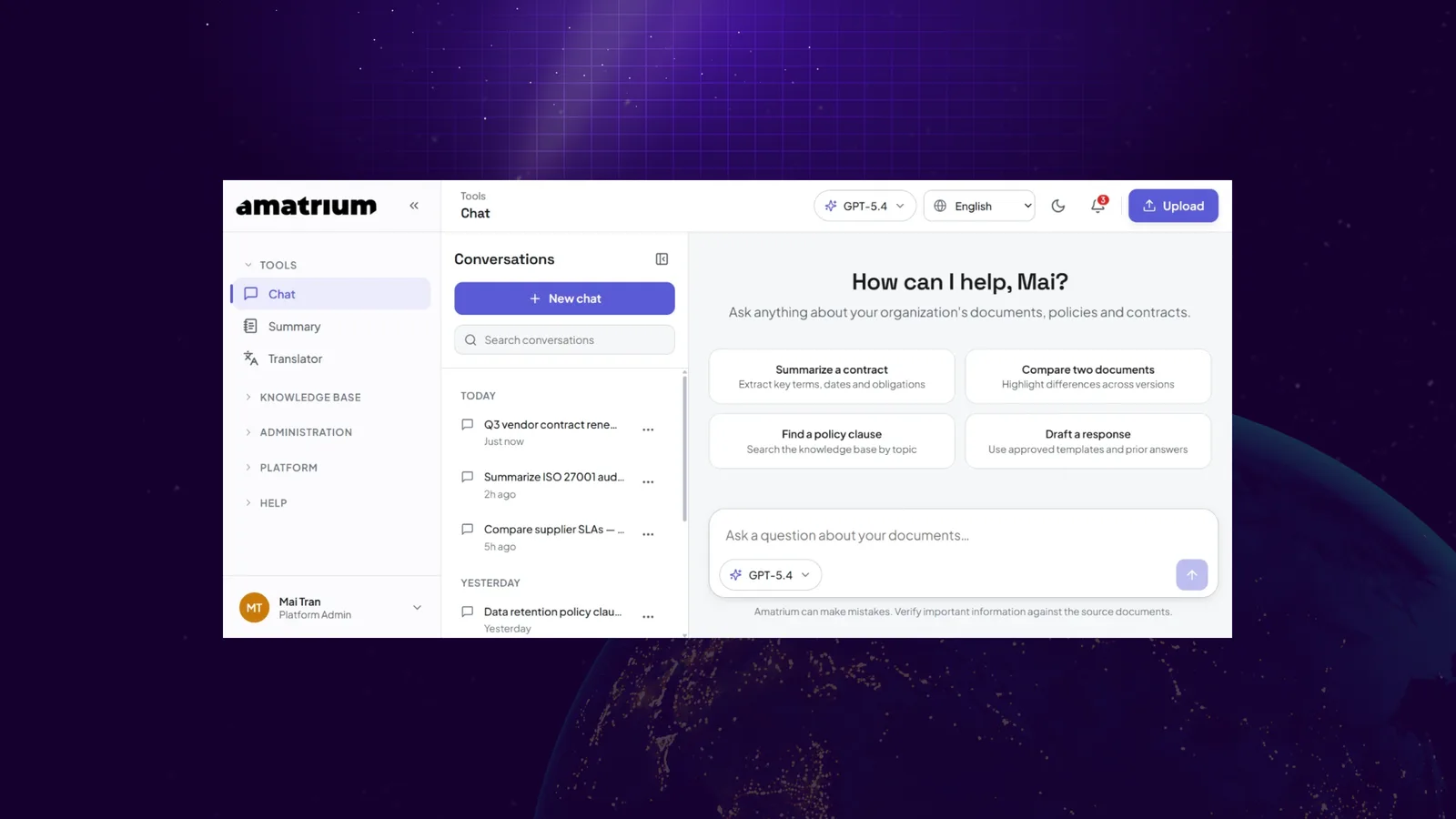
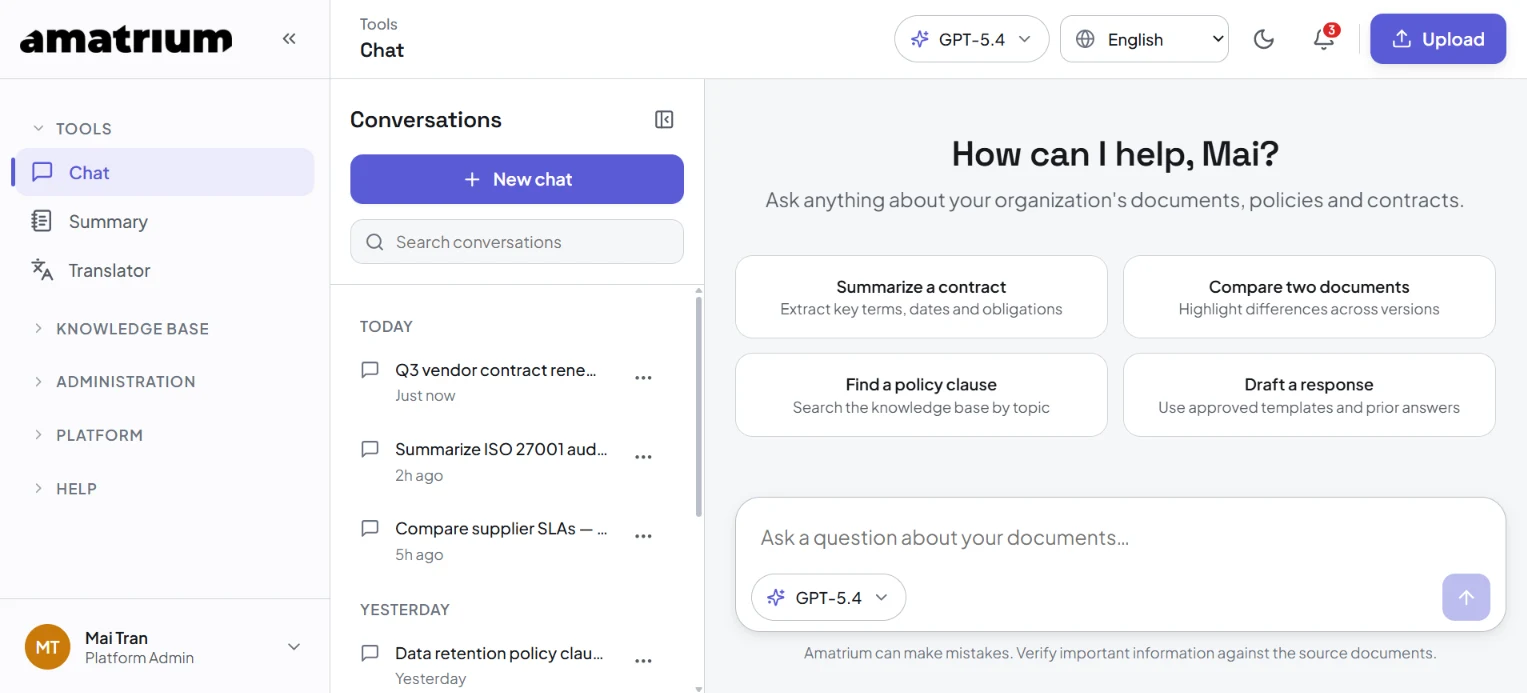
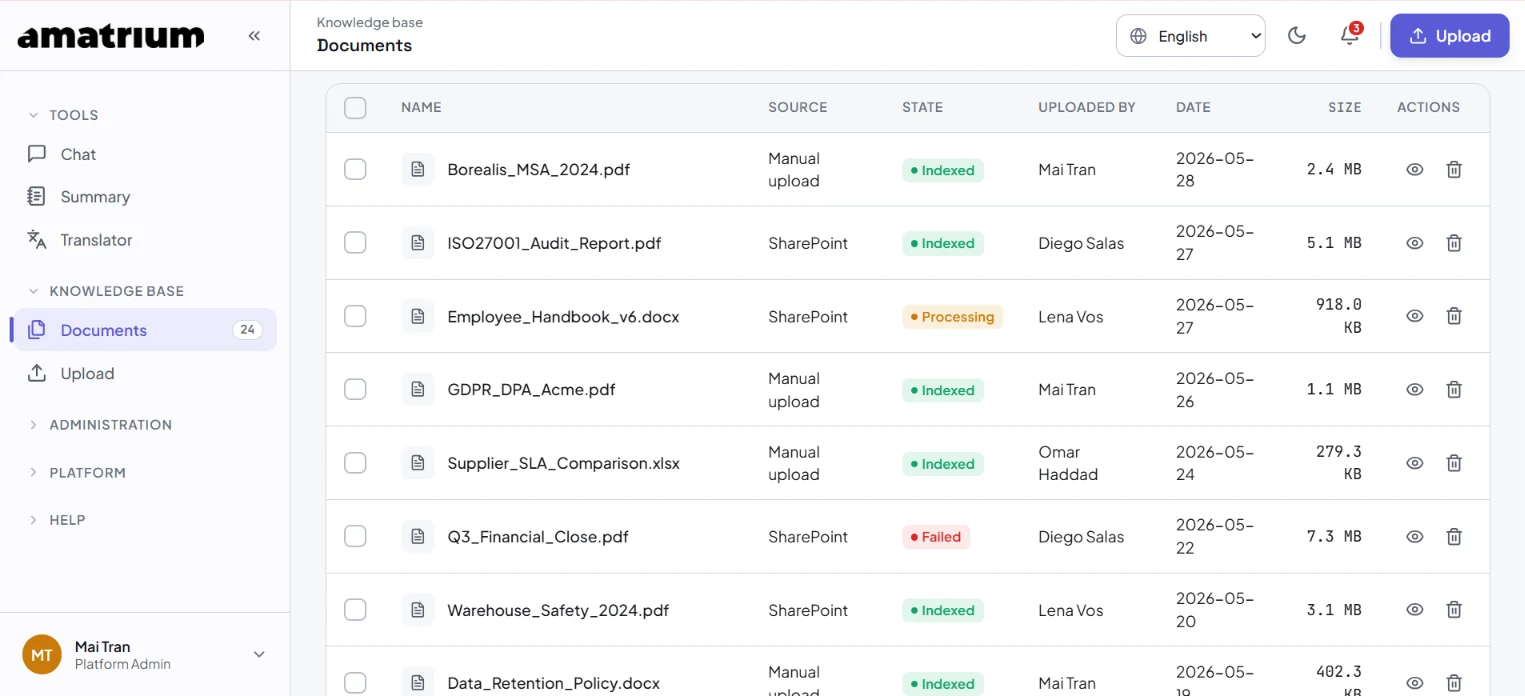
The product began years ago as a tool for calibrating material compositions, such as the percentages of nickel, iron, copper, and cobalt needed for target properties. Eastgate developed it into AmatriumGPT, a secure enterprise AI knowledge hub hosted on Azure. Powered by Claude Sonnet 5, the platform searches the company's document library, answers technical questions, and cites the source behind every response. Investigate mode also lets users compare information across a selected group of files.
A format-preserving translation tool handles PDF, Word, and PowerPoint files, while the interface supports both Japanese and English. Following a controlled pilot with one business unit, AmatriumGPT entered daily production use with unlimited seats and no per-user document limits. Amatrium estimates that it cuts the time engineers spend on document queries by roughly 30-40%.
The Challenge
Technical knowledge spread across thousands of files
Filename search could not find engineering meaning
Specifications, datasheets, and research reports contained the values that shaped each project. An engineer looking for the tolerance of a specific alloy could search filenames, but not the technical meaning inside the documents.
Per-user limits would fragment the knowledge base
Document limits would force each employee to upload and manage a private subset of the company library. Instead of searching one shared source of knowledge, every user would work from a different and incomplete collection.
Every answer needed traceable evidence
An answer without a source was not usable in materials engineering. Engineers needed to trace every figure, tolerance, and technical claim back to the original datasheet before acting on it.
Manual translation was slow and destructive
Specifications moved between English and Japanese, but translating them manually took days. Retyping a PDF or presentation also risked breaking its tables, layout, and slide structure.
The Solution
AI document search with a source behind every answer
01 Retrieval comes before generation
An ingestion pipeline keeps the organization's full document library in a single Azure AI Search index. Claude Sonnet 5 builds each answer from the documents returned by that search.
For questions about aluminum alloys, the platform works from Amatrium's own technical files instead of relying on the model's general knowledge.
02 Citations engineers can verify
Claude Sonnet 5 searches the full library and returns the source document with every answer. Engineers can open the original datasheet and inspect the relevant figure before using it.
When an incorrect tolerance could affect a physical product, the citation is not an optional reference. It is what makes the answer usable.
03 Investigation across selected files
Investigate mode lets users select the documents relevant to a question and search across them together.
An engineer can compare six reports side by side or trace what each document says about the same material. This turns a scattered set of files into a focused body of evidence.
04 Translation that preserves the original format
The translation tool processes PDF, Word, and PowerPoint files while preserving their layouts, tables, and slide structures.
The interface also supports Japanese and English, so international teams can read the same technical documents without rebuilding them manually in another language.
05 Security controls built into the architecture
A multi-model gateway built on OpenRouter separates the application from its model providers. The team can change model routing without rebuilding the application.
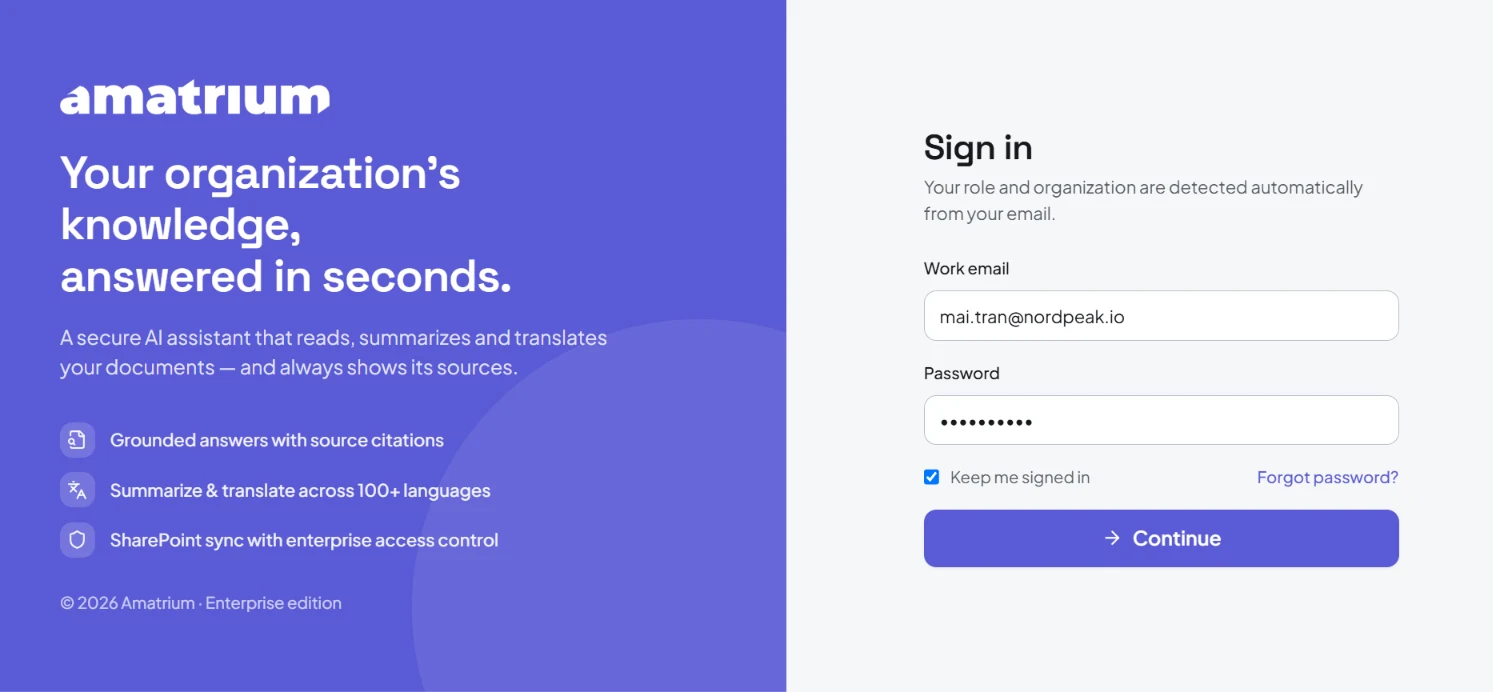
The platform operates inside a defined security boundary with single sign-on, role-based access, and audit logging. Its architecture was aligned with Amatrium's ISO 27001 and IEC 62443 security posture, clearing the way for a pilot inside a live business unit.
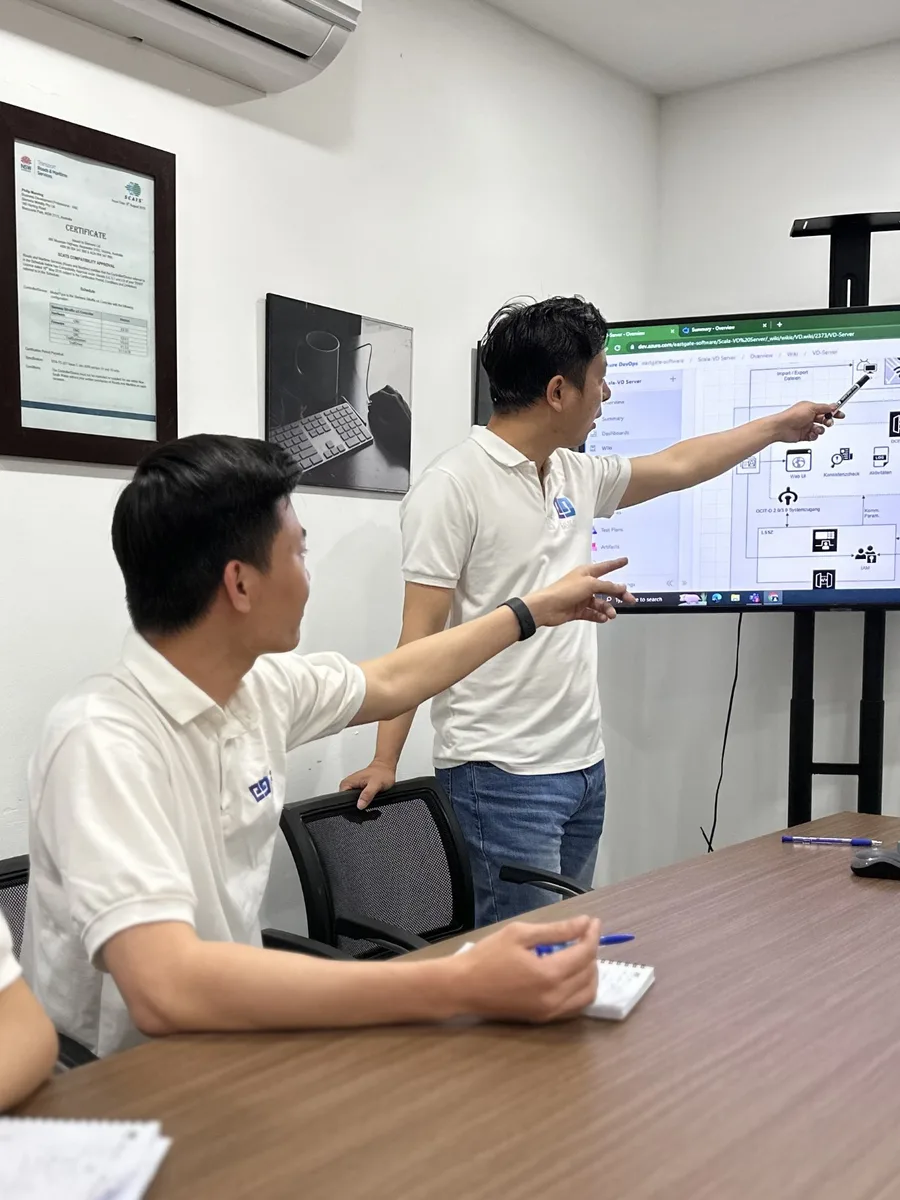
Inside the build
The Results
An enterprise AI knowledge hub, live in five and a half months
Live in five and a half months
The project ran from 14 January to 27 June 2026. It covered corpus and language scoping, retrieval-augmented generation architecture, a controlled pilot with one business unit, and an organization-wide rollout.
The pilot validated retrieval accuracy, source citations, and Japanese localization before the document corpus expanded. The wider rollout therefore scaled a system that had already been tested in production conditions.
One shared library with no per-user limits
The organization now works from one shared document pool with unlimited seats and uploads.
Employees search the same company knowledge base instead of creating private document collections that expose each person to a different subset of information. Retrieval quality is checked as the library grows, and token-cost monitoring tracks the cost of each query to show whether unlimited access remains commercially sustainable.
Three production features used every day
Cited document search and Q&A, multi-file investigation, and format-preserving translation are all in production.
Claude Sonnet 5 powers the search and investigation features. The translation tool handles PDF, Word, and PowerPoint files, while the platform provides a native Japanese interface for international teams.
30-40% less time on document queries
Amatrium estimates that AmatriumGPT cuts the time engineers spend on document queries by roughly 30-40% compared with manual search.
Instead of searching filenames across thousands of specifications, datasheets, and research reports, engineers get a cited answer drawn directly from the source.
Tech Stack
- Frontend

- Backend
- AI/ML


 Azure Document Intelligence
 Retrieval-Augmented Generation
- Infrastructure



- Protocols
- SSO2FARole-based access controlAudit logging
- Tools
- SharePoint sync
Let's Work Together
Tell us what you're building. Our engineers will respond within 1 business day with a concrete next step - no sales script, no obligation.
- Email[email protected]
- Phone(+84) 246.276.3566
- Response TimeWithin 1 business day