SaaS product
development that still
ships in year three.
Multi-tenant platforms built to keep their release cadence as the product grows,
tested continuously rather than stabilized after the fact.
Trusted on systems that cannot fail










Common challenges from SaaS
product teams.
Most utility teams are not short of data. They are short of systems that stay correct as distributed
generation, new tariffs and new regulation arrive faster than the software can absorb them.
-
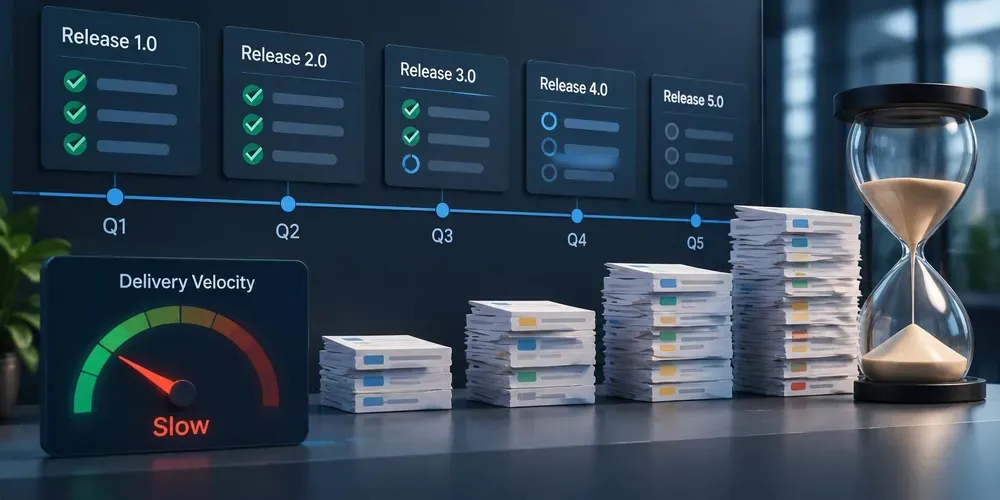
Velocity falls as the product grows
Each release takes longer because nobody can predict what a change will break.
-
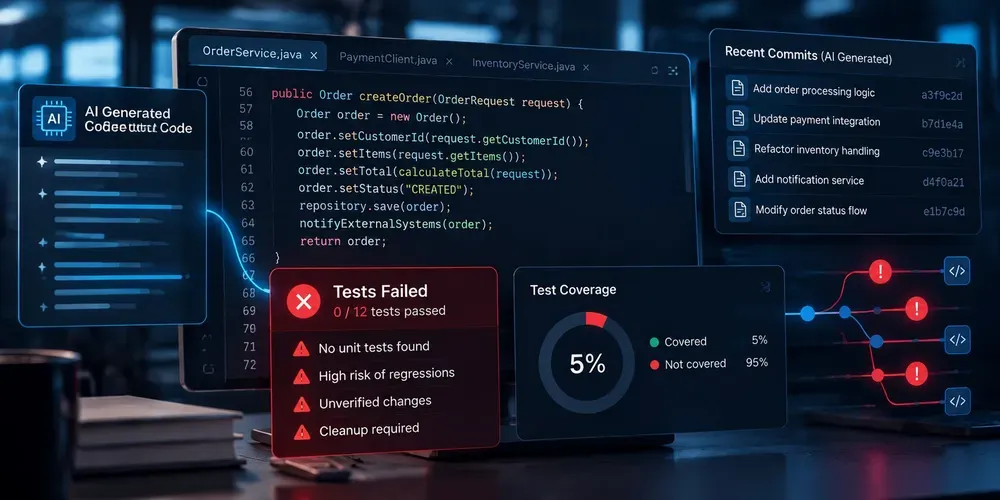
AI-generated code without tests
Features arrive fast and unverified, and the cleanup lands on whoever inherits them.
-
Multi-tenancy retrofitted late
Isolation, tenant configuration and data residency get bolted on after the first enterprise deal.
-
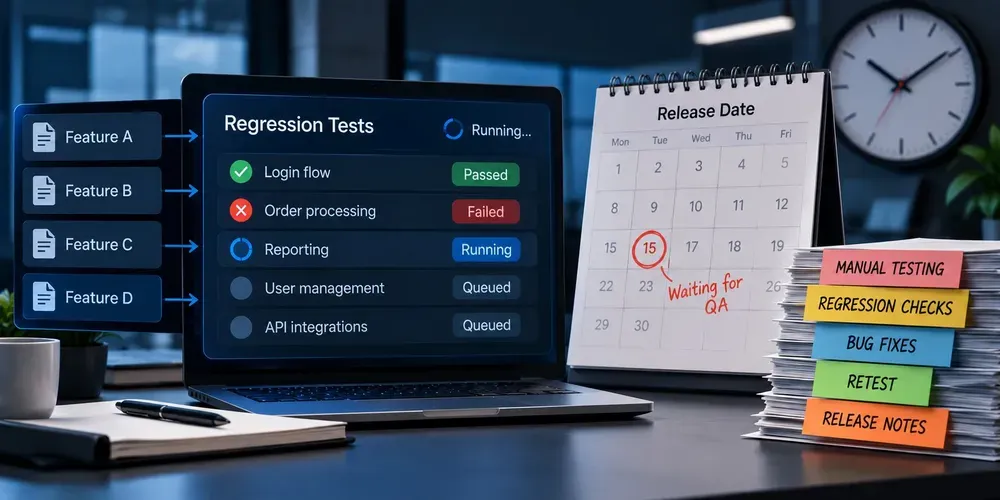
QA is the bottleneck before release
Manual regression cycles run longer than the sprint, so cadence is capped by how fast people can retest the code.
-
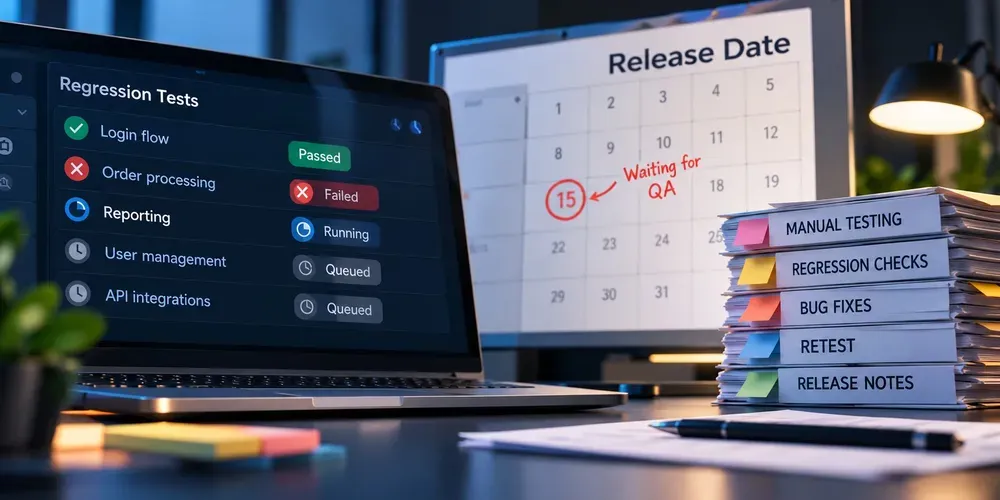
Release day is a manual event
Testing, regression checks, fixes and release notes all happen by hand in the last week, and every slip moves the date.
Energy and grid
software development
services
Every engagement runs on the Agentic SDLC, with senior
engineers at every gate and evidence produced as the work
proceeds.
- Custom Software Development ERP, SCADA and partner systems on governed, observable interfaces.
- AI Test Automation Spec-derived tests for continuous safety assurance.
- Vibe Code Rescue & Cleanup Spec-derived tests for continuous safety assurance.
- Cloud Services Spec-derived tests for continuous safety assurance.
- Web & Mobile Development Aging control systems re-platformed incrementally, no big bang.
We engineer every layer of the
grid software stack.
From field devices and substation protocols to the forecasting models the control room
depends on.
Multi-tenant architecture
Tenant isolation, configuration and data residency designed in from the start.
Product engineering squads
Senior teams that own delivery, not tickets, alongside your product organization.
AI test automation in CI
Tests derived from specifications, running on every change.
Cloud cost & scalability
Infrastructure that scales with usage without scaling the invoice at the same rate.
Integrations & public APIs
Partner integrations and public APIs your customers can build against.
Vibe code rescue & cleanup
AI-generated codebases brought under specification, test and review.
The standards safety demands,
met by default.
Five layers turn AI speed into governed, predictable delivery. The model is a commodity
you can buy anywhere. The value is in the four layers we engineer above it.
IEC 61850
Substation interfaces to standard
IEC 62443
OT security levels built in
ISO 27001:2022
Certified
ISO 9001:2015
Certified
ISO 27001:2022 and ISO 9001:2015 are certifications we hold. IEC 61850 and IEC 62443 are standards we engineer and test against on your behalf.
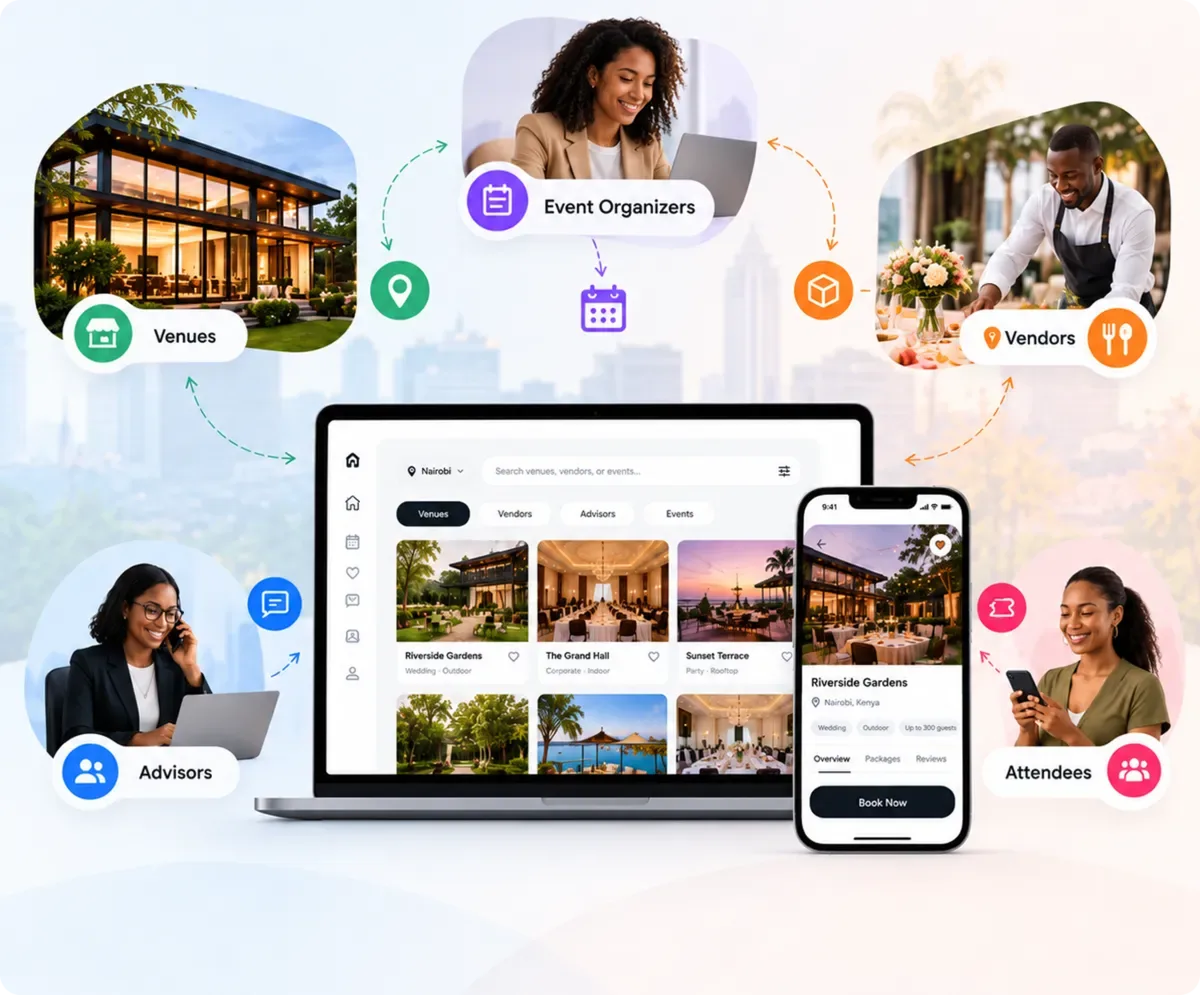

A cybersecurity
monitoring product,
engineered to its
compliance bar.
A security monitoring platform built with SIEM integration and
threat detection at its centre, with compliance requirements
treated as specifications rather than late-stage review comments.
View all case studies"Eastgate developed our cybersecurity monitoring platform with deep
attention to compliance standards. Their engineers understood SIEM
integration and threat detection from day one."








Certified, accredited and independently reviewed
- Built to SOC 2 Type II criteria
- GDPR-compliant processing, DPA available
- NDA and IP assignment as standard
Frequently asked questions.
Something not covered here? Ask an engineer directly, no SDRs, no funnel.
Will you tell us to throw it away?
Only if that is the honest answer, and we will show the reasoning. Most codebases we see are worth stabilizing. A rewrite restarts the risk clock.
How fast do we get an answer?
The audit takes one to two weeks and ends with a written risk register and a sequenced plan you can act on with or without us.
Can you work on a live product?
Yes. Stabilization happens behind tests and feature flags, with the product running.
Do you keep using AI on the rescue?
Yes, inside the harness: specs first, tests derived from them, human gates on every merge. The tooling is not the problem. Ungoverned use of it is.
What do we get if we stop after stabilization?
A product that stops breaking, a test suite that tells you when it does, CI running on every change, and documentation your team can work from.
Let's Work Together
German engineering discipline meets agentic delivery. Send a short note and we'll reply within one business day, straight to an engineer, no SDRs, no funnel.
- Email[email protected]
- Phone(+84) 246.276.3566
- Response TimeWithin 1 business day