An agent drafts the quote
It reads the request, pulls prices and terms from your CRM and puts the quote together.
Our engineers work alongside your team to select a workflow, connect it to your systems and take it into production. Measure results against an agreed baseline.
Mekong OS case view: quote request QR-2041 arrives from the customer portal. An agent drafts it from the price list and contract terms, flags that the 8% discount is above the 5% policy, the account owner approves it, and the quote is sent and logged in the CRM.
Trusted on systems that cannot fail


A useful demo can still leave the process unchanged. People draft faster, but work waits in the same queues, follows the same approvals and needs the same manual updates.



Define who approves decisions, connect agents to your systems and measure what changes when the workflow goes live.


//// 01 Owned
Before go-live, we work with your team to define who approves actions, what agents can change and how exceptions reach the right person.
//// 02 Connected
Agents make permitted updates in the system of record, with approval where required. Work moves forward without someone copying a draft between systems.
//// 03 Measured
Establish processing time and review effort before deployment. Compare live results against that baseline and track the cost of running the workflow.
Pick work your team repeats every day, with clear rules and someone who owns it. Agents do the prep, your people make the calls and your systems stay up to date.
It reads the request, pulls prices and terms from your CRM and puts the quote together.
If a discount or term goes past your policy, the account owner says yes or no before it goes out.
The quote is sent and logged for you, and you can track turnaround against where you started.
It reads the fault report and the sensor alert, checks the machine's history and drafts the order.
The planner confirms the priority, the parts and when the machine can be stopped.
The order shows up in the system your team already uses, and time to close is tracked.
It pulls the details from forms and attachments, checks them against your rules and points out what is missing.
Claims above your threshold go to an adjuster, with all the evidence in one place.
The outcome is saved in your claims system, with a clear trail of how it was reached.
It works out what the customer needs, gathers their account details and drafts a reply.
Changes to access, accounts or billing get a quick approval from the person who owns them.
The ticket is closed in the service desk your team already uses, and the customer is told.
Named after the Mekong, which carries water from six countries to Vietnam's delta. Mekong OS, Eastgate's Intelligence Layer, is built on the same idea: what your business knows flows into one governed current and comes out as work your systems can use. Or we deliver on a partner platform you already use.
Coordinate agents and people across each step. Define how work moves between tasks, approvals and system updates.
Set policies, approval rules and evaluation criteria. Audit records show what happened as work moved through the process.
Turn workflow decisions into permitted system updates. Record the actions and measure their effect on the process.
Ask about a process and the answer cites what it read in your organization second brain. Anything an agent is not permitted to open stays closed, and the answer says so.
Mekong OS answers "Can we release the credit hold on order SO-4471?" with "Yes. Northline Steel paid invoice INV-2209 on 14 November, so they are back under their credit limit. Policy lets the finance lead release the hold." It cites the AR ledger in the ERP and credit policy v3, and shows that the board minutes were not opened because the agent has no access to them.
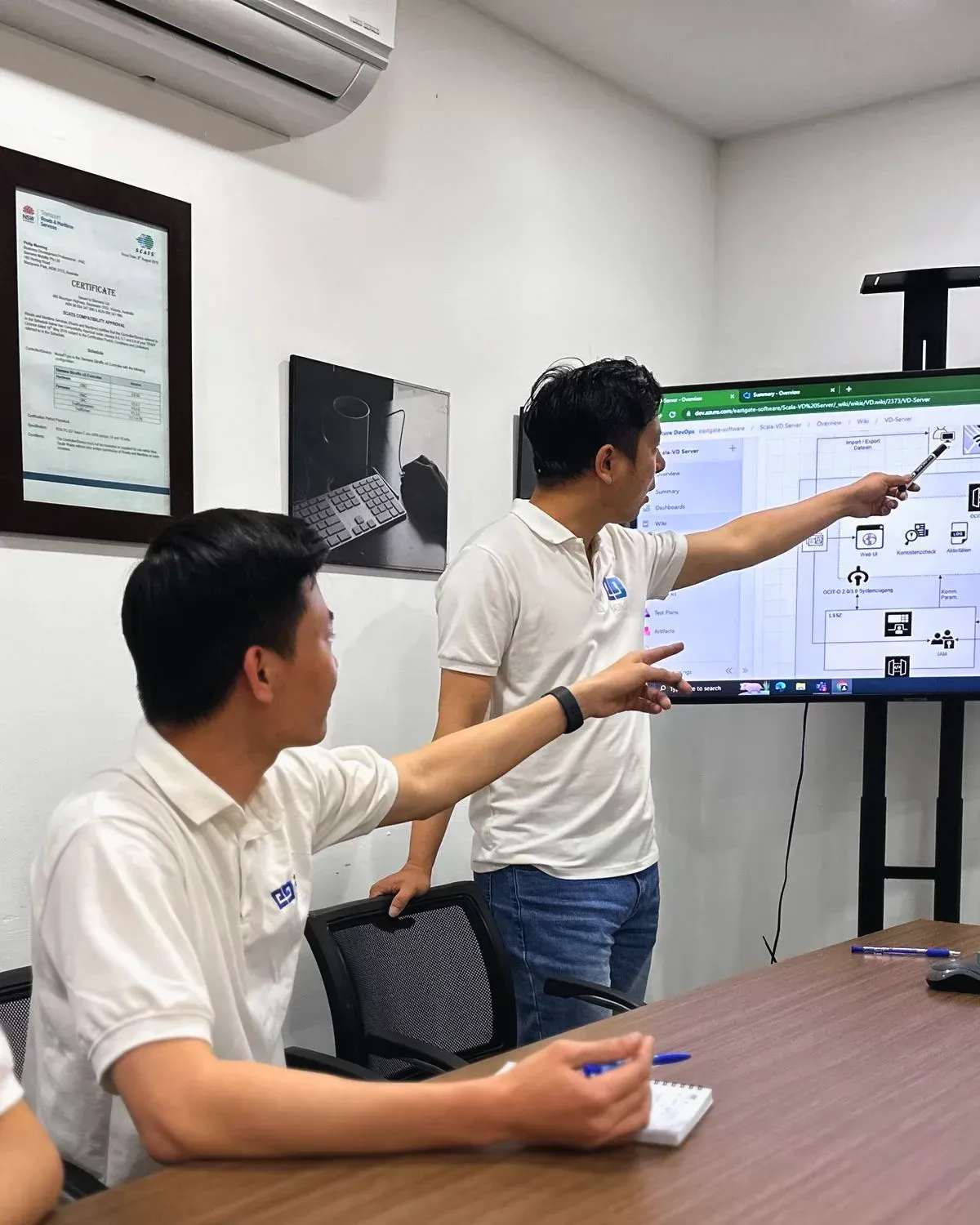
An embedded engineer works with your process owners from workflow design through deployment. Integration, data and security specialists join as the work requires, with clear responsibility for delivery.
Discuss an engagementEastgate specialists, as needed
Your people
Process owners and decision makers
Forward-deployed engineer
Accountable for delivery
Your systems
CRM, ERP and documents
Agree the scope, milestones and acceptance criteria before work starts. Each stage produces deliverables your team keeps and uses.
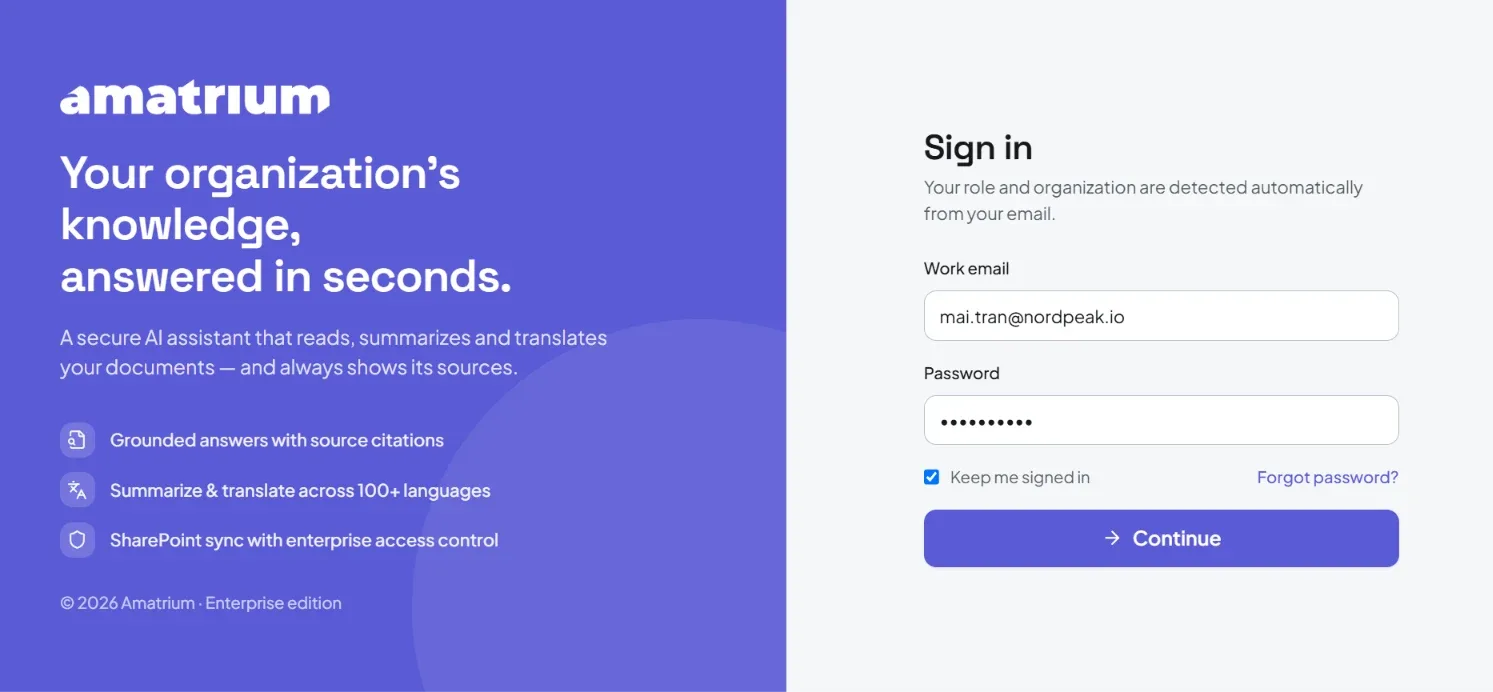
Engineers needed answers from thousands of specifications, datasheets and research reports, with the source behind every figure before they acted on it.
We built AmatriumGPT: one search index for the full library, cited answers people can verify, and role-based access for every organization.
Results
Embedded engineers take one use case into production alongside the people who own the process.
Fixed price, then outcome-based
Our project team delivers a defined workflow against agreed milestones and acceptance criteria.
Fixed price per milestone
A long-term team builds and operates additional workflows as your roadmap grows.
Time and materials or monthly retainer
Agree the baseline and target before deployment. Once the workflow is live, a fixed fee covers delivery and an outcome bonus is payable only for measurement periods when the agreed KPI meets its target.
We agree on measurement data and scope-change terms up front. Depending on the workflow, the KPI may measure processing time, cost per transaction, downtime or automation rate.
Discuss outcome pricingExample: time to close a maintenance incident
Target agreed up front: 20 hours
19 hours. Target met: the fixed fee plus the outcome bonus.
Certified, accredited and independently reviewed



Something not covered here? Ask an engineer directly, no SDRs, no funnel.
We redesign one business process so that AI agents do the routine steps inside it: they read the case, prepare the work, ask the right person for approval and update your systems. Your people keep the decisions, and every step is recorded.
High-volume work with clear rules and a named owner, such as proposals and quotes, maintenance work orders, claims or document processing and service requests. We start with one where today's cycle time can be measured, so the result can be shown.
RPA follows fixed scripts and breaks when a screen or document changes. A chat assistant helps one person draft faster, while the case still waits in the same queue. Agents in a workflow read unstructured input, take the next step within the rules you set, hand decisions to people and update the system of record themselves.
The first workflow is usually a fixed price for discovery and delivery. Once it is live and the baseline is measured, part of the fee can depend on the result: a fixed fee plus a bonus only in the periods where the agreed KPI hits its target. Model and infrastructure costs are tracked per workflow, with spend limits set from the start.
It depends on the process and the systems it touches. We measure the baseline first, demo early with representative cases and agree the acceptance criteria before going to production. For example, the AmatriumGPT knowledge hub went from kickoff to production in 5.5 months.
Agents only see what their role permits and act inside a permission boundary you approve. Consequential steps wait for a named person, and every input, decision and action is recorded for audit. The workflows can also run in your private cloud or on premises.
No. Agents connect to the CRM, ERP and document systems you already use. We deliver on Mekong OS, Eastgate's platform, or on a partner platform your company already runs, and the assessment decides which fits.
A process owner and the people who make decisions in the process, authorized access to the systems involved, representative cases and business rules, and someone who signs off production acceptance.
Bring us a process worth improving. Send a short note and we'll reply within one business day, straight to an engineer, no SDRs, no funnel.