Airport and logistics hub software that keeps pace under pressure.
Connect baggage handling, equipment control and operational systems to keep busy hubs moving, even when traffic peaks and connection windows narrow.
Trusted on systems that cannot fail


Common challenges from airport
operations teams.
Delays build at the handovers between check-in, sortation, make-up and aircraft loading. When systems lose track of a bag or disagree on flight status, teams lose time resolving the gaps.
-
Where is the bag? The last scan only tells half the story.
The last scan shows where a bag was, not where it is now. Teams can miss a transfer at risk until the bag misses its flight.
-
Conflicting systems leave teams chasing the facts
AODB, BHS, A-CDM and FIDS show different operational updates. Controllers turn to phone and radio to establish what is happening.
-
Every new airline adds another integration project
Type B messages, CSV files and emails arrive through separate interfaces. Each connection needs custom work, and failed messages leave teams tracing who should act.
Connect every layer.
Keep the operation moving.
We engineer the software from baggage-line PLCs to the AODB, A-CDM and airline systems that coordinate airport operations.
-
Connect departure control systems, Type B baggage messages and AIDX flight data through one messaging hub.
-
Bring flights, stands and turnaround milestones into one live view. Flag delays so teams can act before they affect the next movement.
-
Hold early bags in storage and release them to the correct flight when its loading window opens.
-
Route bags through tray and conveyor systems from check-in to the correct make-up area for loading.
-
Control conveyors and sorters through PLC and SCADA systems. Coordinate dispatch for tugs, carts and loaders.
-
Track baggage events through aircraft loading. Flag transfers at risk so teams can act before bags miss their flight.
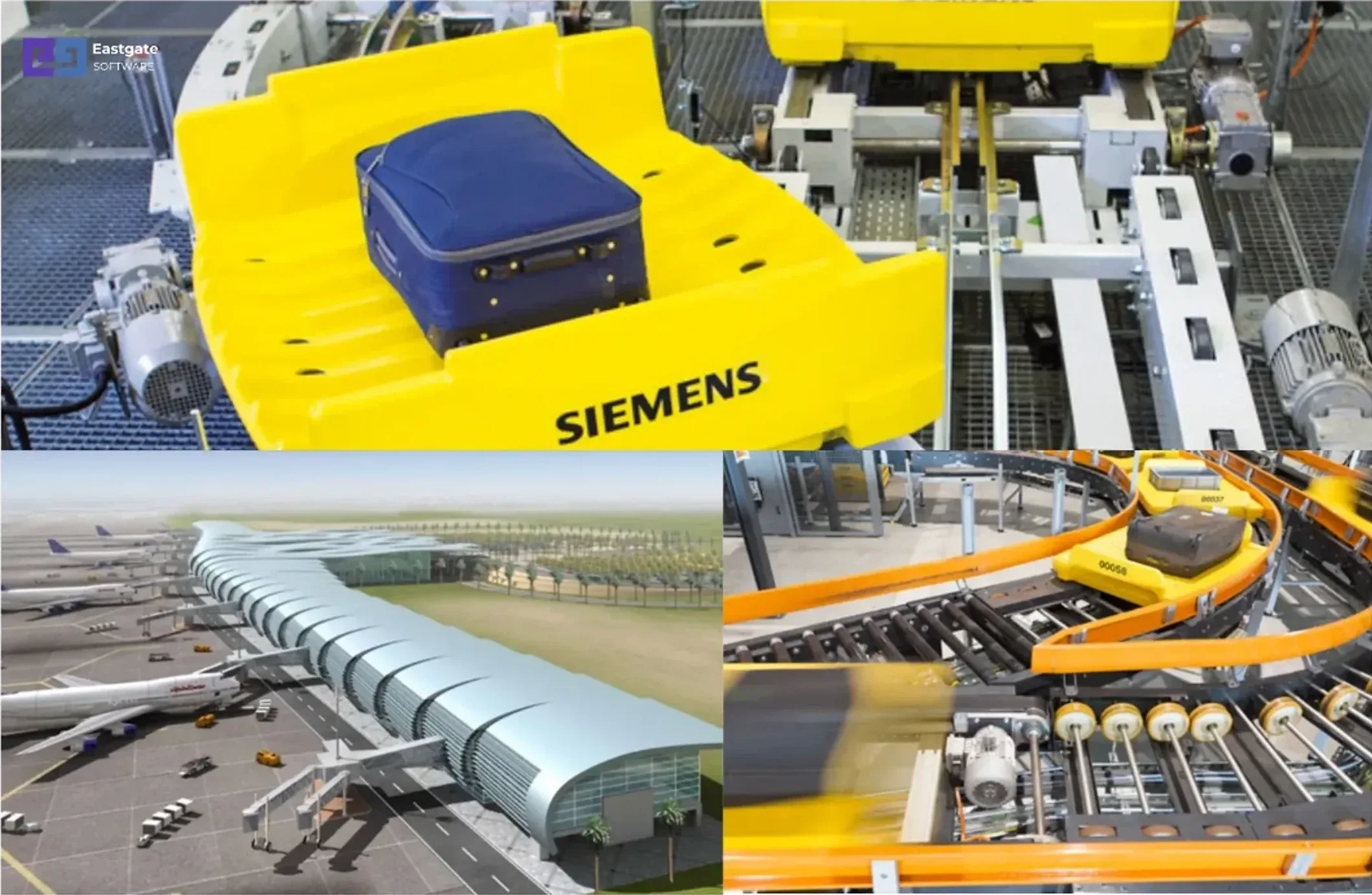

One baggage platform, configured for every airport
Siemens Logistics needed one baggage handling platform for international airports of very different sizes, all running on the same Siemens logistics hardware, fully automated from check-in to boarding.
Our dedicated team built BagOS as one architecture each airport configures rather than rebuilds, integrated with the hardware and its PLC control, with a tray-based conveyor that protects every bag through peak holiday traffic.
Results
- Baggage routing accuracy
- 100%
- On-time transfer SLA
- 99%
- Fewer manual touchpoints
- 60-80%








Certified, accredited and independently reviewed




Airport and logistics
software development services
Every engagement runs on the Agentic SDLC, with senior engineers at every gate and evidence produced as the work proceeds.
Talk to an engineer- Custom Software Development BHS, AODB and operations software built around how your hub actually runs.
- AI Test Automation Tests derived from specifications, run on every change before it reaches the baggage hall.
- Vibe Code Rescue & Cleanup AI-generated operations tools brought under specification, test and review.
- Cloud Services Messaging hubs and tracking platforms that scale with peak traffic.
- Web & Mobile Development Apps for ramp, baggage and control-room teams that keep working at the edge of coverage.
Frequently asked questions.
Something not covered here? Ask an engineer directly, no SDRs, no funnel.
What does baggage handling system (BHS) software do?
BHS software coordinates how bags move through an airport. It uses bag-tag data to route bags through screening, sortation and storage, sends control instructions to conveyors and sorters through PLCs, and shares baggage status with airport and airline systems.
Can you integrate with our existing BHS, AODB and airline systems?
Yes. We connect your existing systems through supported interfaces, including Type B baggage messages such as BSM and BPM, AIDX flight data, AODB and A-CDM feeds, and vendor APIs. These connections bring flight and baggage updates together while retaining the systems you already operate.
How does your software support IATA Resolution 753 baggage tracking?
We build scan capture and messaging around the baggage tracking points covered by Resolution 753. The software records tracking events, shares them with connected airline and ground-handling systems, and flags missing scans for investigation. This gives teams evidence of baggage handovers and helps them identify gaps in the tracking record.
Do you develop PLC and equipment control software for baggage systems?
Yes. Our work includes PLC and equipment control software for baggage systems. For Siemens Logistics, we built BagOS, a standardized baggage handling system integrated with Siemens logistics hardware and PLC controls. The case study reports deployment at multiple international airports, 100% baggage routing accuracy and a 99% on-time transfer SLA.
How do you manage updates around live airport operations?
We test changes against simulated traffic before release, then roll them out in small increments using feature flags. Release windows are agreed around flight schedules and peak demand, with a rollback plan for each release. For BagOS, delivery also had to accommodate peak holiday traffic.
Can we see an example of your airport software?
Yes. ORION is an illustrative demo that brings AODB data, baggage flow and A-CDM turnaround milestones into one operational view. Explore baggage tracking from check-in to loading and see how flight and turnaround updates fit together. No sign-up is required.
Let's Work Together
German engineering discipline meets agentic delivery. Send a short note and we'll reply within one business day, straight to an engineer, no SDRs, no funnel.
- Email[email protected]
- Phone(+84) 246.276.3566
- Response TimeWithin 1 business day