Cloud migration for systems that must stay online

We map dependencies, rehearse the cutover, and move workloads in stages. Before each move, we agree on the acceptable interruption, the checks for success, and the point at which we would roll back.

Trusted on systems that cannot fail

SiemensYunex TrafficAutobahn
Finastra
InfraSignal
Abidat
PTV Group
Körber
Westfalia
FrontFundr
GFA Group
Seneca ESG
Cygon
Dasan
Aimsun
eGo Digital
Maoneng
OnOffice
Reinstil
Zero
Downtime during migration
99.99%
Post-migration uptime
40%
Infrastructure cost reduction

Certified, accredited and independently reviewed
Clutch Top App Modernization Service company, Vietnam 2026Clutch Top Cloud Consulting Company, Vietnam 2026Clutch Top Machine Learning Company, Vietnam 2026
Capabilities

Cloud migration services from planning through handover

We make each migration decision visible, then hand over an environment your team can run.

Cloud architecture

We design the target around how your system must perform. Your team reviews the trade-offs before we build.

Infrastructure as code

We store infrastructure definitions in your repositories. Your team can review changes and recreate an environment without manual setup.

CI/CD and DevSecOps

We automate the path to production and enforce security checks before release. Each change leaves a record of what passed and who approved it.

Migration with controlled cutovers

We group workloads by dependency and move them in controlled waves. Each cutover has agreed success checks and a rollback trigger. The assessment identifies any required outage window.

Monitoring and reliability

We monitor the service against agreed reliability targets. Alerts reach the right operator, with a runbook for the response.

Cost and security review

After cutover, we compare actual cloud spend with the assessment estimate. We then adjust resource sizes and permissions where production evidence shows a need.

How we build it

Spec-driven, AI-assisted delivery, governed end to end

Cloud migration comes with its own set of challenges and hurdles. With AI, we run this five-step approach to give you governed and predictable outcomes. Every phase closes with deliverables you can point at, so you always know what has moved, what is still running on the old estate, and what the next step will be.

  1. Assess

    Map what needs to move

    The assessment sets a baseline for performance, dependencies, and business constraints.

    • Workload inventory. Each application's role and current performance become the baseline.
    • Dependency map. Connections show which workloads need to move together.
    • Data obligations. Sensitive data gets a clear location and access plan.
    • Target design. Your team reviews the architecture and wave plan before build begins.
    Typical duration 4-6 weeks
  2. Prepare

    Build the target environment

    The target environment is ready for a trial before any production traffic moves.

    • Landing zone. Agreed region and resource policies are in place before workloads arrive.
    • Network link. The old and new environments can communicate, with backup connectivity where needed.
    • Security baseline. Access controls are set before production workloads move.
    • Test environment. A separate setup gives the team room to rehearse the migration.
    Typical duration 3-4 weeks
  3. Rehearse

    Test one representative workload

    A trial exposes gaps while the production route is still unchanged.

    • Pilot workload. A representative system puts the planned migration method to the test.
    • Data checks. Source and target data must match, and connected services must still work.
    • Cutover rehearsal. The trial measures the traffic switch and tests the rollback path.
    • Updated runbook. Findings from the rehearsal go into the production steps.
    Typical duration 2-3 weeks
  4. Migrate

    Move production in waves

    Production moves in waves. Each wave must pass its agreed checks before the next begins.

    • Wave order. Related workloads move according to dependency and business impact.
    • Traffic control. Where feasible, the original route stays live until the new one passes validation.
    • Rollback data. The rollback plan accounts for new transactions if traffic must return to the source.
    • Wave review. Your team sees the results before approving the next cutover.
    Typical duration 8-16 weeks
  5. Handover

    Retire the old system when ready

    The old system stays available through an agreed validation period. Retirement follows once the new environment is ready to stand on its own.

    • Operational proof. Production behavior is checked against the agreed thresholds.
    • Handover pack. Your team receives the design and runbooks it needs to operate the system.
    • Cost adjustment. Actual usage guides resource sizing after cutover.
    • Source retirement. Old systems are retired after the exit checks pass and rollback is no longer needed.
    Typical duration 2-4 weeks
30-50%
Faster time to market
40-60%
Less rework and rip-out
2-3x
Delivery throughput per engineer
90%+
Requirements covered by tests
Platforms and tooling

What we use to power your cloud migration

Your workload sets the platform choice. We design the target so your team can operate it after handover.

Amazon Web Services

For mixed workloads

AWS offers several ways to host existing applications. We choose the migration route for each workload and define the target environment in code so your team can repeat it.

Microsoft Azure

For Microsoft estates

Azure often fits an estate that already uses Microsoft identity. We carry access rules into the target environment and verify them before cutover.

Google Cloud

For data-heavy workloads

Google Cloud fits when data processing shapes the architecture. We plan the data path before moving applications, then test performance against the agreed baseline.

Firebase

For real-time products

Firebase suits product features that need live data sync. We check the data model and projected usage before choosing its managed backend services.

  • AWS
  • Azure
  • Google Cloud
Migration paths

Common Migration Scenarios

The starting point determines what must change before cutover. Here are the 4 scenarios we see most often. See which checks belong in your plan.

On-premises data center to AWS, Azure, orGoogle Cloud

  • Map dependencies
  • Plan network access
  • Schedule data transfer
  • Define the coexistence period

AWS to Azure or Google Cloud

  • Map equivalent services
  • Translate access rules
  • Validate migrated data
  • Rehearse DNS cutover

Single cloud to Multi-cloud

  • Define each cloud’s role
  • Plan cross-cloud links
  • Set shared operations
  • Allocate costs

VMs and bare metal to Containers and Kubernetes

  • Check container fit
  • Plan persistent data
  • Update the CI/CD pipeline
  • Monitor the new runtime
Deliverables

What to expect when you partner with us

Before anything moves, we agree on what the new environment must do. Your team can review each stage and take over with a clear record of how the system works.

Planning and design

  • Target design. See where each workload will run and why we chose that design.
  • Agreed behavior. We record what must keep working, so tests have a clear target.
  • Data model. We map the data that must move and where it belongs.
  • Migration plan. Workloads move in waves, with an owner for each cutover.

Migration and implementation

  • Phased migration. We verify each wave before the next one begins.
  • Automated tests. Checks based on agreed behavior run in the delivery pipeline.
  • Repeatable environments. Infrastructure code lets your team recreate the target setup.
  • Cutover runbooks. We document how to release and when to roll back.

Knowledge transfer

  • Your repositories. You own the code and pipelines used to run the system.
  • Operating guide. Your engineers get instructions for routine work and incident response.
  • Test evidence. Each requirement links to the checks that covered it.
  • Engineer walkthrough. We show your team how the new environment works.

After launch

  • Future changes. Recorded design choices give your team a starting point.
  • New engineers. Specifications explain the behavior they need to preserve.
  • Routine releases. Tests check changes before your team approves deployment.
Case study

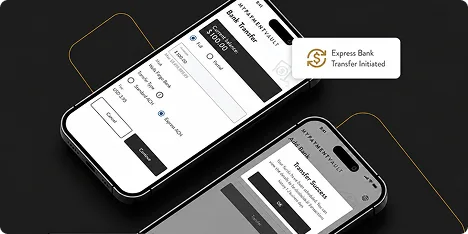
A US fintech platform moved to Azure with zero downtime

Live financial services could not take an outage window. We moved the whole on-premise estate to Azure behind Front Door and API Management, separating consumer, business and shared workloads, with a primary-secondary SQL Server pair for failover. Delivered 2021 to 2024.

Downtime during migration
Zero
Post-migration uptime
99.99%
Also applied in
SaaS & Product Development
Testimonials

Our Clients Say It All

Engagement

How we work together

Every engagement runs on the Agentic SDLC, with senior engineers at every gate. Every engagement starts with an assessment. It is fixed price, it ends in a written plan, and the plan is yours whether or not you continue with us.

Find your engagement

Where are you starting?
What do you need?

Cloud migration

Commercials: Fixed scope, phased cutover

Typical duration: 8-20 weeks

When it fits: You need to move a live system while limiting disruption during cutover.

Plan a cloud migration

Platform build

Commercials: Fixed-scope platform setup

Typical duration: 6-12 weeks

When it fits: Your team needs a cloud foundation it can use to deploy and manage applications.

Plan a platform build

DevSecOps retainer

Commercials: Dedicated engineers, billed monthly

Typical duration: 6+ weeks

When it fits: Your cloud platform needs ongoing release and reliability work.

Discuss a DevSecOps retainer

Frequently asked questions

Something not covered here? Ask an engineer directly, no SDRs, no funnel.

Can you migrate without downtime?

In most cases yes. We lock current behavior with tests, move service by service behind stable interfaces, and keep every step reversible. Where a short window is unavoidable we tell you early.

Which cloud should we be on?

The one your team can operate. We will give you a cost and capability comparison, but the operating model matters more than the provider.

Do you do multi-cloud?

Where there is a real reason: data residency, a specific managed service, a contractual requirement. We do not recommend it for its own sake.

How do you handle security and compliance?

Policy and scanning run as gates in the pipeline, not as an audit at the end. We work to ISO 27001 practices and align to your compliance obligations.

What happens after go-live?

Runbooks, alert routing and handover to your team, or a retainer if you would rather we keep operating it while your team ramps.

Let's Work Together

Tell us what you're building. Our engineers will respond within 1 business day with a concrete next step - no sales script, no obligation.