Custom software built
to evolve
after launch
We build custom software on our Agentic SDLC, so you can launch with confidence and adapt without turning every change into a rebuild.
Trusted on systems that cannot fail
















Certified, accredited and independently reviewed





Build your product with one
accountable engineering team
One senior-led team handles design, engineering, testing, deployment, and support. You get clear ownership from discovery through long-term improvement.
Web applications that fit your workflow
Build customer portals, internal tools, dashboards, and commerce platforms around the way your business works.
What we build for the web:
- Customer-facing portals
- Internal tools for back-office teams
- Dashboards, analytics, and commerce platforms
Mobile apps built for real-world use
Create secure native or cross-platform apps for iOS and Android, with performance and compliance covered throughout delivery.
What we build for mobile:
- Native iOS and Android apps
- Cross-platform apps from one codebase
- Performance and compliance checks through delivery
Front ends that feel fast
Give users fast, accessible interfaces backed by an architecture that remains manageable as the product grows.
What the front-end work covers:
- Responsive, accessible interfaces
- Fast first load and interaction
- A component architecture that stays maintainable
Back ends you can build on
Turn your business rules into reliable services that connect systems, process data, and support new features.
What the back-end work covers:
- Business rules as reliable services
- System integration and data processing
- Room to add features without a rewrite
Cloud systems ready to scale
Run your software on a cloud foundation designed for reliable deployment, practical scaling, and clear operational control.
What the cloud work covers:
- Reliable, repeatable deployment
- Practical scaling as load grows
- Clear operational control and visibility
SaaS products built for growth
Build secure multi-tenant software that can support more customers without becoming harder to operate.
What the SaaS work covers:
- Secure multi-tenant architecture
- Onboarding more customers without more effort
- Cost and performance that hold as you grow
APIs that keep systems connected
Connect your applications and external services through well-documented APIs that keep data moving reliably.
What the API work covers:
- Custom API design and engineering
- Integration with external services
- Documentation your team can work from
A dedicated team with full ownership
Add a stable engineering team with secure delivery practices, protected IP, flexible capacity, and useful working-hour overlap.
What a dedicated team includes:
- A stable team with secure delivery practices
- Protected IP and contractual assignment
- Flexible capacity with working-hour overlap
DevOps for safer releases
Automate delivery, infrastructure, and monitoring so releases become safer and easier to repeat.
What the DevOps work covers:
- Automated build and release pipelines
- Infrastructure as code per environment
- Monitoring and alerting on the live system
AI-assisted custom software development with senior oversight
AI agents handle defined build tasks from approved specifications. Senior engineers control each review and release decision, with test evidence showing what is ready to ship.
Plan your custom software project before development
We map the current system and identify the risks that could affect delivery. Your estimate is then tied to an agreed specification instead of a loose feature list.
How AI supports this phase
Agents examine the existing code and documents to map the current system. Senior engineers confirm the architecture and approve the estimate, giving discovery an evidence-based starting point.
What this phase includes
-
Assessment
A focused call clarifies the business goal, current system, and main constraints.
-
Discovery
We define the architecture direction and initial specifications, then identify risks that could change the scope or price.
-
Estimate
Each area of work receives a price range with its assumptions stated clearly.
-
Proposal
Choose a fixed price for agreed scope or a monthly team when priorities need room to change.
Set up your software development team and environment
Before feature work starts, you know who owns each decision, where the software will run, and how changes will pass review.
How AI supports this phase
Agents create the repositories, pipelines, and environments from the approved architecture. Senior engineers check the technical baseline before feature work begins.
What this phase includes
-
Kickoff
Your stakeholders meet the engineers and delivery lead responsible for the work.
-
Architecture baseline
We document the system design and the reasoning behind its main decisions.
-
Delivery environments
We set up the repositories, CI pipelines, and environments in your accounts from day one.
-
Delivery plan
Both teams agree on review gates, meeting cadence, and what qualifies as done.
Turn business requirements into testable software specifications
We describe the required system behavior through examples your team can review. Once approved, those specifications guide both development and testing.
How AI supports this phase
Agents draft behavior examples and a matching test plan from your requirements. Senior engineers flag gaps or conflicts, and your team approves each example before it guides the build.
What this phase includes
-
Behavior specifications
Your team reviews the examples that define how the system should respond.
-
Domain model
We map the data, ownership, and integration boundaries behind those behaviors.
-
Test plan
Each approved requirement connects to a test, keeping coverage visible throughout delivery.
-
Iteration plan
The plan shows what we will build and what your team needs to provide along the way.
Build and test software in controlled iterations
AI agents implement the approved specifications. Senior engineers review the code and test evidence before each change is merged.
How AI supports this phase
Agents generate implementation code and update its tests from the approved specifications. The full test suite runs on every change, while senior engineers decide what is ready to merge.
What this phase includes
-
Working software
Each iteration ends with a demonstrable result in a shared environment.
-
Continuous testing
The specification-based test suite runs whenever the code changes.
-
Reproducible environments
Infrastructure remains versioned alongside the application.
-
Visible progress
Weekly updates show completed work, current risks, and approved changes.
Launch custom software with the system in your hands
The software runs in your accounts. Its documentation reflects the released system, and your engineers know how to operate it.
How AI supports this phase
Agents assemble the runbooks, architecture records, and coverage report from the released system. Senior engineers verify the material and rehearse the release with your team.
What this phase includes
-
Release procedures
Your team rehearses deployment and rollback before go-live.
-
Current documentation
Architecture and operations records match the released system.
-
Coverage evidence
The final report connects test results to the requirements your team approved.
-
Knowledge transfer
Recorded working sessions prepare your engineers to release and support the system.
Maintain and improve custom software after launch
We trace every requested change through the specifications and tests before development begins. You can see its likely impact before deciding what to do next.
How AI supports this phase
Agents trace each request through the specifications and test suite, then report what it affects. Senior engineers use that evidence to scope and approve the change.
What this phase includes
-
Change planning
We document the expected impact before development begins.
-
Live operations
Monitoring and SLA reports keep service health visible.
-
Planned maintenance
Security patches and dependency updates follow an agreed schedule.
-
Flexible support
Choose a support retainer or monthly team that can adjust with demand.
Know what drives your software estimate
We price the work against a defined scope and written assumptions. You can see where the number comes from and what could change it.
Product goals and scope
We define what the product must achieve and where the first release ends before estimating the work.
Delivery risks
We identify the risks most likely to affect scope, timing, or cost while there is still room to act.
Technology fit
We choose the stack around your existing systems, internal skills, and operating constraints.
Work breakdown
We divide the scope into concrete workstreams and tasks, so each estimate maps to defined work.
Effort and timeline
We estimate each task, then combine the ranges into a timeline and budget you can plan against.
Delivery plan
We map the phases and milestones, including the decisions and inputs your team must provide.
Pricing assumptions
We state every assumption behind the estimate, so you can see what would change the price.
What we build it with
Chosen for what your team can operate and hire for, not for what is new.
Backend







Frontend




Data





Platform







Mobile



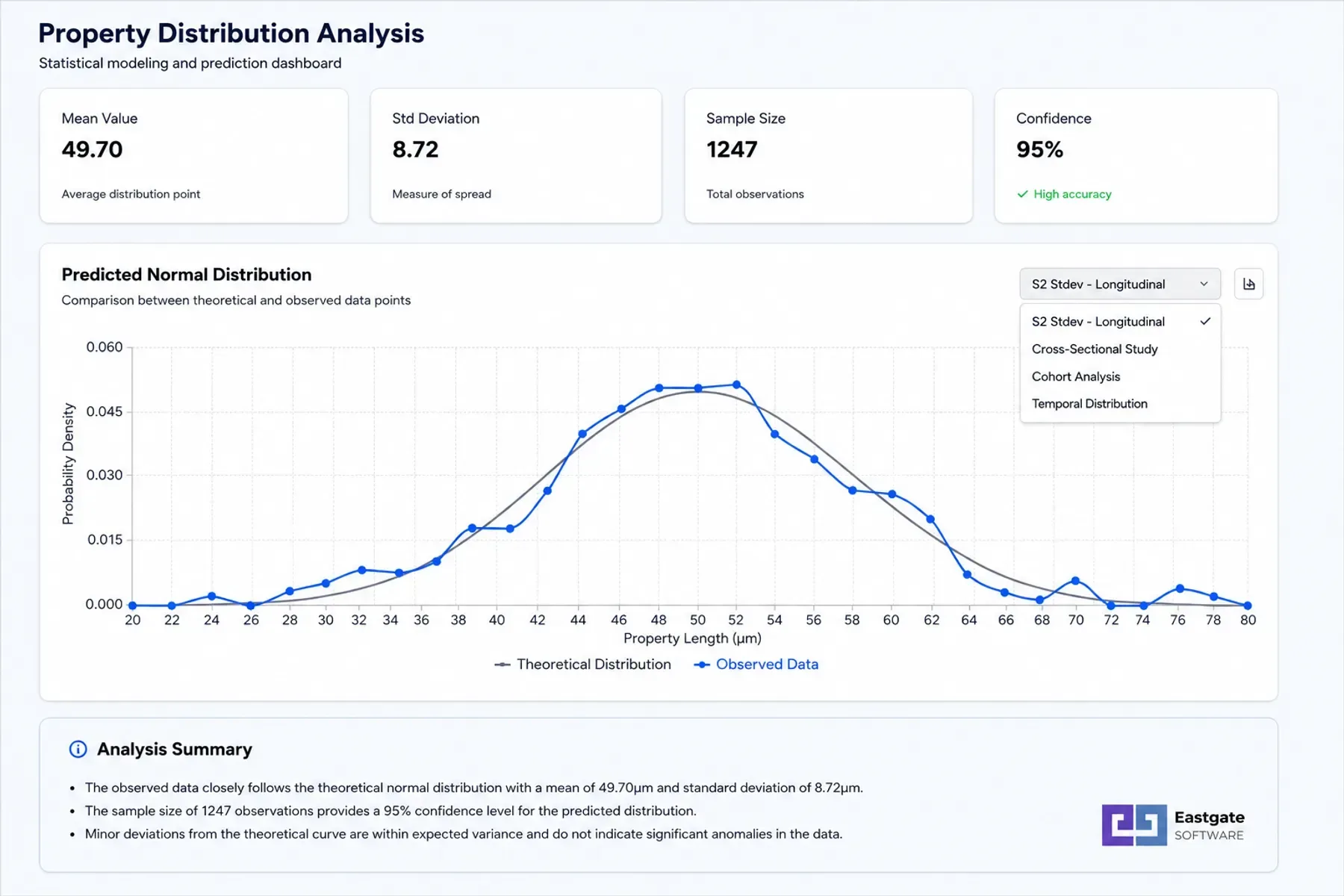

Predictive AI for material engineering, validated before anything reaches the lab
A construction materials manufacturer needed to predict how mix compositions would behave across changing manufacturing conditions, where every formulation cost weeks of physical trials. We built a web platform that simulates the mix, retrains on real production data and compares predicted against observed distributions, so formulations are validated in software first.
- Prediction accuracy
- 90-95%
- Fewer testing cycles
- 40%








How we work together
Every engagement runs on the Agentic SDLC, with senior engineers at every gate.
Cloud migration
Move a live production system to the cloud through a phased cutover. Before work begins, we agree on the target architecture and rollback plan. Each workload moves separately to limit risk and keep the service available. Pricing is fixed against the agreed scope.
Platform build
Give your teams a cloud foundation they can build on. We define the landing zone and delivery environments as code, including the CI/CD pipelines. This makes the setup repeatable and easier to maintain. You own the accounts, repositories, and pipelines from day one.
DevSecOps retainer
Keep a veteran engineering team responsible for your platform after launch. They manage releases and monitor service health, while planned maintenance covers security patches and dependency updates. The monthly retainer can scale with demand.
Explore other services
Frequently asked questions
Something not covered here? Ask an engineer directly, no SDRs, no funnel.
How do you price a custom build?
Two shapes. A fixed price against an agreed specification set when scope is clear, or a monthly embedded pod when it will evolve. Either way you see the spec and the plan before you commit to the build.
Who owns the code?
You do, from the first commit. Source, pipelines and infrastructure sit in your accounts, or transfer to them at handover.
Does AI write our production code?
Agents write code from specs your team approved. Senior engineers hold every gate: review, tests and merge. Nothing ships that a human has not signed off.
How fast can we start?
An assessment within a week of first contact. Discovery typically starts two to three weeks after that, once the team is named.
What if requirements change mid-build?
Specs are versioned. A change updates the spec, the tests derived from it and the plan, so the cost of the change is visible before it is made rather than after.
Let's Work Together
Tell us what you're building. Our engineers will respond within 1 business day with a concrete next step - no sales script, no obligation.
- Email[email protected]
- Phone(+84) 246.276.3566
- Response TimeWithin 1 business day