Artificial intelligence (AI) helps businesses forecast demand and assess risk. Agentic AI adds a different role by choosing follow-up actions toward a goal. Access rules and human oversight determine how much responsibility it receives.
When comparing agentic AI vs traditional AI, focus on the work you want to improve. A better forecast and a shorter investigation solve different problems. The two approaches also work together when an agent draws on a trained model’s predictions.
This guide compares their capabilities and practical uses. You’ll also find questions to assess costs and risks before choosing a solution.
What is traditional AI, and how is agentic AI different?
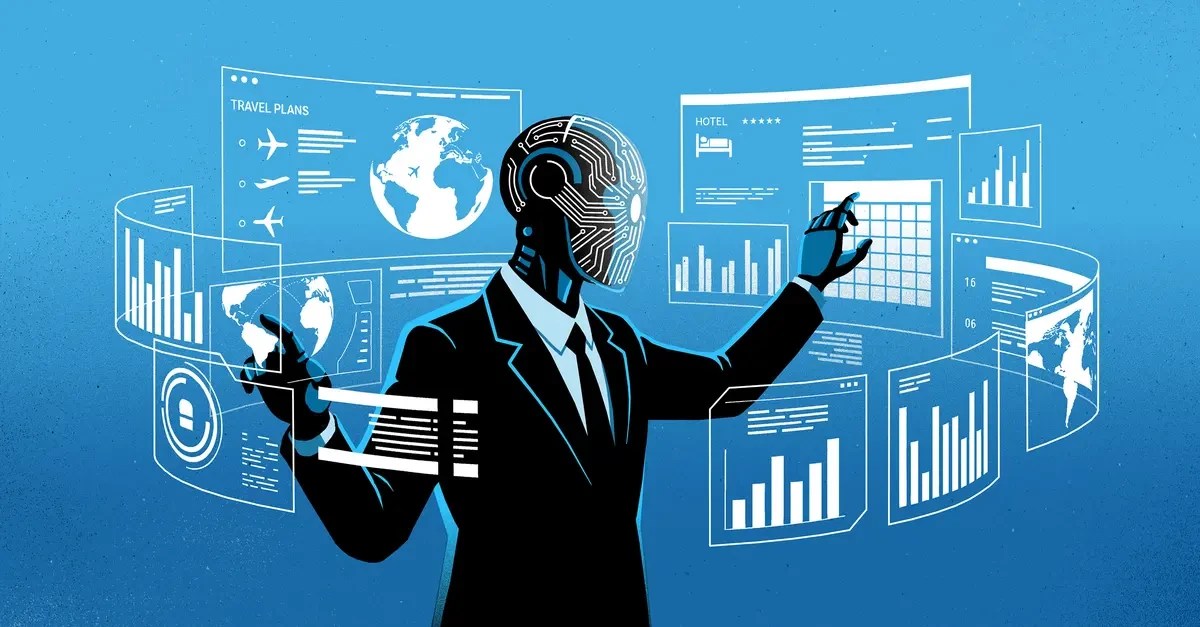
Traditional AI includes systems built for a specific purpose, such as forecasting demand or classifying data. In agentic AI, a model chooses some of the actions the software takes toward a goal.
The comparison here focuses on predictive machine learning in business apps. Machine learning uses training data to find patterns, which a model then applies to new cases.
AI’s broader history also includes rule-based systems. These follow rules such as “if this happens, do that.” Machine learning works differently: it finds patterns in training data instead of relying only on written rules.
Agentic apps often use a large language model, or LLM, to interpret and generate text. The model chooses from software functions the app makes available. These functions are called tools. For a record lookup, the app runs the request within its access rules and returns the record or an error to the model.
A predictive model and an agentic app perform different roles within the same design. A generative model adds a further role by producing content or interpreting a request. An app that combines agentic AI and generative AI uses a model to generate text and choose some next actions.
Agentic AI vs traditional AI: Key differences
Traditional predictive AI supplies an inference, which is a prediction made from new data. Agentic AI adds model-directed choices about what to do next. The table compares those roles within a business app.
| Question | Traditional predictive AI | Agentic AI |
| What does it deliver? | A prediction, classification, or score | Selected actions toward a goal |
| Who chooses what happens next? | App code or a person responds to the prediction | The model selects the next steps delegated to it |
| Who executes software requests? | App code submits data and handles the prediction | App code executes model requests within access rules |
| What changes with new findings? | New data informs the next prediction | Returned findings inform the next action |
| How do you assess it? | Prediction quality and the app’s response | Choice of actions and correct completion |
| What drives cost? | Training, model hosting, and app upkeep | Model calls, connections, and review effort |
In traditional predictive AI, the app decides how to respond to the model’s prediction. Code determines whether a score triggers an action or goes to a person for review. The model supplies evidence for that decision, even when nobody has to prompt it to run.
Agentic AI gives the model some control over how the request proceeds. If a lookup leaves a question unresolved, the model chooses whether to request another record or ask a person for missing details. Prediction accuracy alone does not capture whether those follow-up choices help resolve the request.
AI costs and operational risks
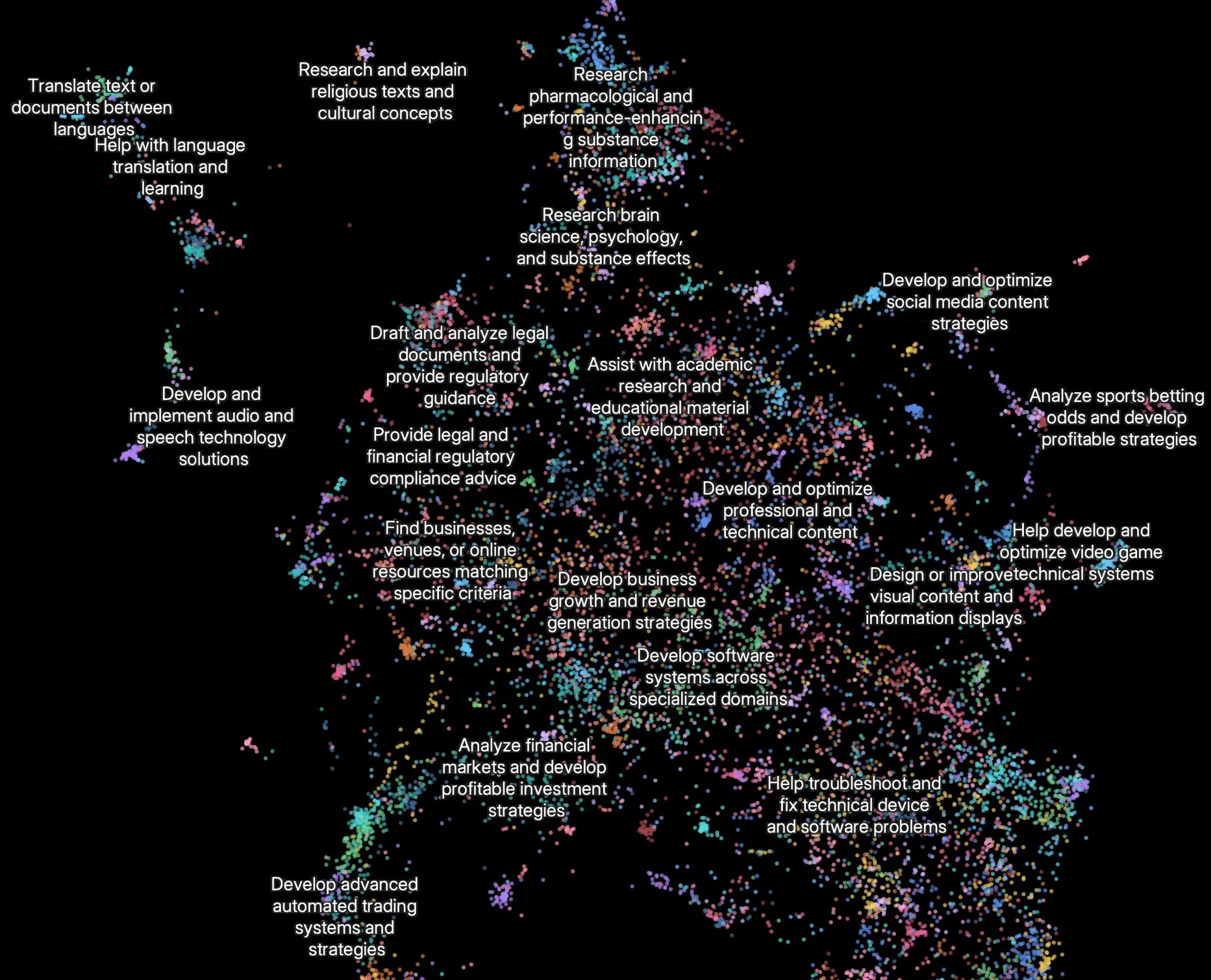
Your AI agent development cost estimate covers the initial build, while ongoing spending depends on how each request runs. A predictive model brings training and hosting costs. An agent adds model calls as it selects and follows up on requests, and sometimes retries them after a failure. Human approval adds the reviewer’s time to that cost.
Both designs also involve software upkeep and, where required, human review. Their running costs therefore depend on the complete request, including the effort left to people, rather than model fees alone.
Repeated model calls also increase token use. Tokens are units of text processed by a model. In its June 2025 engineering report, Anthropic said agents used about four times as many tokens as chat interactions, and multi-agent systems about 15 times as many.
Model-selected actions create risks beyond prediction errors. A wrong prediction affects any decision based on it. A mistaken agent request also risks an incorrect record change if the app permits that request to run. Access rules limit the available changes, but permitted actions still require testing against the business requirement.
Traditional AI vs agentic AI: Use cases and limitations
Traditional AI fits a request for a forecast or score. An agent fits a task where each finding changes what to inspect next. The model’s answer and the follow-up decisions each require their own tests.
Traditional AI for forecasting and classification
A predictive model suits demand forecasting or risk scoring when you need an estimate rather than a system that chooses follow-up actions. Its prediction provides a specific answer to assess against observed data.
The right measure depends on what the model predicts:
- Forecast error: How far the forecast differs from the value later observed.
- Precision: What share of the model’s positive flags were correct?
- Recall: How many actual positive cases did the model find?
Those scores describe model quality, while tests of the wider app show how it handles each flagged case. Adding an agent does not by itself fix poor data or inaccurate predictions. A better forecast and less time spent on follow-up research address different parts of the process.
Fixed workflows for repeatable operations
Use a fixed workflow for AI automation when you know the next steps and the rules for exceptions. Code controls when each step runs. An LLM still has a role if one step calls for reading a message or assigning a category.
Branches and retries also fit within a fixed workflow when developers set the rules that trigger them. A retry triggered by an error follows those rules. If the model instead selects a different record based on what came back, it controls that follow-up choice. The source of that choice determines whether the follow-up is programmed or model-directed.
Agentic AI for investigation and adaptive decisions
Agentic AI fits an investigation where each finding shapes what to examine next. The model uses the goal and available evidence to choose a permitted request. It receives the response before deciding how to proceed.
Model-directed choices introduce failure points beyond prediction errors. An agent could select records that do not answer the question or continue despite a failed lookup. Cases drawn from the business process reveal how it handles those situations, including when it asks for missing details.
AI agent safety depends in part on which changes the app permits. An agent that reads records on its own but waits for approval before changing them has less authority than one allowed to make updates independently. In either design, human review provides a way to handle requests beyond the agent’s permissions or ability to resolve them.
How agentic AI and traditional AI work together
An agentic app calls a prediction model to get a forecast. The agent chooses when to request a forecast, while the trained model produces it.
Amazon Web Services (AWS) demonstrates this setup in a 2025 technical walkthrough about sales forecasting. In that example, Amazon SageMaker AI hosts the trained model. The agent runs with the Strands Agents SDK, a software development kit for building agents.
The app requests a forecast through the model’s endpoint, which is the address that accepts requests for predictions. Once the model responds, the forecast passes back through the agent to the user.
Returning a prediction demonstrates access to the model, without measuring an improvement in forecast accuracy. A stock purchase would require further steps and permission beyond this demonstrated request.
Combining an agent with a predictive model depends on access to the model’s predictions. An AI readiness assessment examines whether the app has permission to request them and whether they suit the intended use. Those prerequisites support a separate assessment of the agent’s behavior: whether it requests a forecast at the right point and uses it to answer the user’s question.
What to evaluate in an agentic AI demo
An agentic AI demo should show which decisions the model makes and whether it completes the task correctly. AI agent monitoring records the app’s requests and responses. Here’s what to look for when comparing those records
Who controls the agent’s next decision?
Ask the provider to show which choices the model makes and which follow app code. A trace or a walkthrough of the settings helps locate that boundary.
The source of a decision matters more than whether the demonstrated sequence varies. Similar evidence often leads a model to make similar choices, while programmed branches let a fixed workflow follow different sequences. A trace is most informative when the provider explains which choices came from the model and which followed those branches.
How does the agent respond to changed data?
The agent’s response to missing or conflicting data shows whether it adjusts its next request to the findings. Ask the provider to introduce such a case and explain whether the response follows a programmed branch or a choice made by the model.
The trace shows how the agent responds when new information arrives. If the facts change but the agent follows its original plan, check whether it missed information that should have changed its next step. When details are missing or unclear, asking a person for clarification is an appropriate response.
Where are access and approval rules enforced?
Access controls belong in the software that handles each request, including connected services. A written instruction guides the model, while those controls reject requests outside the granted permissions.
For changes that require approval, the demo should show that the app waits for an authorized person to approve them. Without that approval, the app must block the change, even if the model requests it. This confirms that the software enforces the rule.
What proves the request was completed?
Completion depends on what you asked the agent to do. A record update is complete when the app saves the correct values with any required approval. An investigation is complete when the answer addresses your question and draws on relevant records.
In your demo, the trace helps explain how the agent reached its result. Comparing the requests with the final deliverable shows whether the connected service applied the intended change. You then assess the result against the task’s requirements, rather than treating any saved update as success.
Choose AI around the decision you want to automate
Traditional AI and agentic AI serve different business needs. A predictive model remains useful when you need a forecast or score, while an agent suits investigations where new findings change the next step. Combining them lets you retain a suitable model while testing whether an agent reduces manual follow-up without compromising correct completion.
A focused pilot tests whether the agent completes requests to your standard and how much review remains. Compare those results with your current process before giving the agent more responsibility.
At Eastgate Software, our agentic process transformation service begins with your existing workflow. We map the steps with your process owner and set the rules for changes that require human approval.